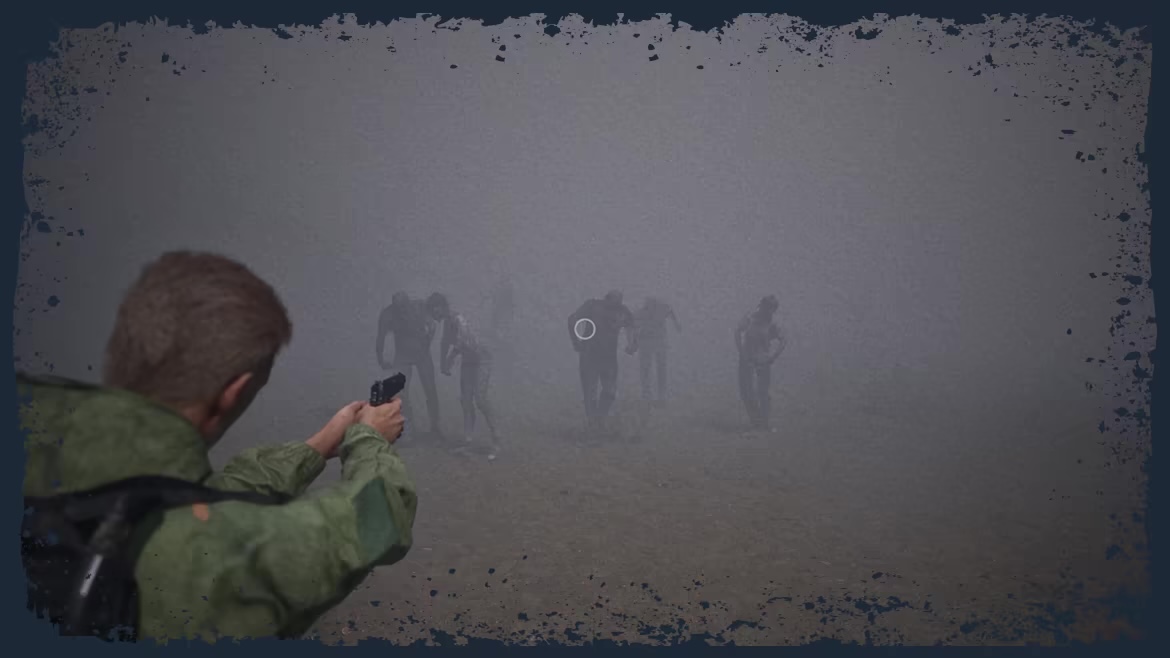
The game runs a 24-hour cycle with wind shifts, sudden rain and dense fog that can completely destroy visibility. When fog rolls in, zombies become more aggressive, faster and harder to kill, so the shelter has to be defended before visibility drops rather than after the first wave hits.
On this page
The 24-Hour Weather Cycle
This fog survival guide and night survival guide for THE DEAD WE KNEW: Open World Survival covers how a 24-hour cycle of weather, rain, wind and dense fog drives the entire survival loop. Fog is the headline mechanic — preview coverage and the official Steam page agree that visibility can be destroyed by dense fog, that fog doubles as a warning sign, and that the threat spikes before players can react.
This page covers what is publicly confirmed before the October 22, 2026 Early Access launch and flags what stays unknown until the game is in players' hands.
Weather Cycle Basics
The game runs a 24-hour day and night cycle with dynamic weather:
- Wind can change direction during a day.
- Rain can start suddenly.
- Dense fog can roll in and "completely destroy your visibility."
Every other system reacts to that cycle, so weather is not decoration — it is the trigger for the worst fights.
Why Fog Is the Headline Threat
Fog is more than atmosphere. The Steam page is explicit:
- Fog is a warning sign, not just weather.
- When fog rolls in, zombies "become more aggressive and attack from within the darkness and fog."
- Preview coverage adds that zombies are faster and harder to kill while fog is active.
The threat scales up rather than the clock-based night scaling common in the genre, so a fog window is when the base takes its hardest hits.
Night Survival Without Fog
Night follows the same cycle, and dangers intensify as night approaches even without fog. Players gather resources, reinforce their shelter and prepare for threats before conditions turn. The same walls and fires that defend against fog also defend against the night threat curve.
How to Prepare Before Fog Arrives
Reinforce the shelter
Add walls, doors, repair anything the previous night broke.
Done when: Layout and material choice match the upcoming fog window.
Stock the fire
Keep cooking, keep the fire lit, keep raw ingredients nearby.
Done when: A fire is already lit when fog rolls in.
Top up cooked meals
Cooked food is what keeps the hunger meter fed.
Done when: Cooked meals are stockpiled for the next fog window.
Plan roles in co-op
Decide who holds the wall, who patrols, who scouts.
Done when: Each player has a defined role before visibility drops.
Co-op Fog Survival
When one player is caught in the mist, teammates must decide whether to push in or hold the line. Separated players face heightened risk simultaneously, so the shelter is the anchor point during a fog window. Solo runs lean on layout; co-op runs split roles.